Sunday, April 09, 2006

Parents role in their kid's schooling years

The math teacher of class VI handed over the marks sheet of the periodical test to me. As usual the teacher's comment was that the children are not putting in the required efforts. No doubt, she was a duty bound lady ! A superficial study of the score sheet did not reveal much. It needed a diagnostic study. I discussed the issue with the teacher and pinned down the problem to a few specific areas, such as

  • How many kids are sure of multiplication tables?
  • How many kids are regular in submitting their homework?
  • How many kids maintain their classworks neatly?
  • Do children concentrate in the class?
  • Do kids have a reasonably high motivation level to learn math?

The survey went on and I thought that the conclusions may have a bearing on other classes too. An alarming number of children were not sure of multiplication tables. But the teacher was hardly in a position to devote time for drilling math tables. We decided to take the help of parents. We called and asked them to insist on their children to learn the tables. The parents were eager to extend a helping hand. The deadline too was set. The teachers followed up the progress of the kids in the class.

The result was remarkable. The message to the children was clear.They understood that they won't be let off scotfree if they don't learn.

If somehow the children miss learning a basic tool in school, it has to be made good at home. The school should never hesitate to ask parents to extend a helping hand wherever necessary. The parents too must be ever willing to extend a helping hand to the school staff to bring out the best in their kids.


Wednesday, April 05, 2006

How to enable kids overcome shyness?


Do you know 40% of the children are shy by nature? Shyness in adults can be traced to their childhood.

Shy children do not like to participate in co-curricular activities and group discussions. They like to stay aloof. They try to remain on the fringes whenever they have to join others at play.

It is not that easy to identify shy children. Often their parents and teachers may be unaware of it. Many bullies may be actually shy and aggressiveness may be a cover up.

My neighbour the five year old Anil doesn't like to talk to guests at all. But he gets into the kitchen or bedroom and starts kicking all the objects there.

Never label your kids as shy. Children may start behaving diffrently then. Shy people are their own worst critics. Shy children don't like criticism they seek encouragement.

12 year old Mira was shy by nature. She was not interested in co-curricular activities. She was almost an isolate. Her parents approached me. After a detailed study of the case, I came to the decision that the child was in her own make believe world. She had maintained all her notebooks neat and clean. In studies she was above average. I was determined to bring her to the main stream somehow. I discussed the matter with her parents She was assigned the job of tutoring another child in the neighbourhood. She was successful in that. The respect she earned boosted her ego. There onwards she never looked back.

Classroom teachers can play a wonderful role in this regard. I used to ask shy children only such questions for which I was sure they knew the answer. Then they would be comfortable in answering before the class.

Get playmates into your home instead of sending the child to play in somebody's house. They can be younger than your child. Then your child will be able to play a lead role without much hesitation.

Enroll your children in clubs and organisations which suit their interests.

Your support and understanding nature play a vital role in enabling them shed their shyness.

Tuesday, April 04, 2006

Is your child gifted?

Talented children are a challenge as well as a mystery. They give their parents and teachers a taste of genius. Such children need to be seen in a fresh light. Whatever be the talent - sports, maths, art, dance, music, oratory - they deserve to be nurtured well.

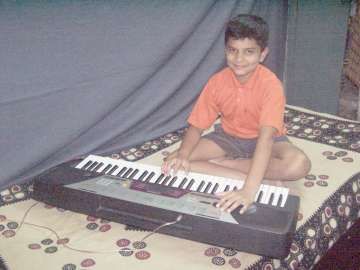
If the schools fail to recognise their special talent, they may begin to hate the school. Give them tasks in fields where they are strong. May be Smitha has long artistic fingers! Get her a sketch pad, water colours and brushes. Appreciate her work and encourage her to explore her abilities in that field. Satwik might have nimble fingers that are dance on the organ keys. Present him an musical organ

Kids spend most of their time in play. Let them enjoy - that is how they sharpen their intellect, learn to cope up with situations and develop their potential in skill management.

Gifted children need a lot of exposure to the outside world. If you want child's talents to flourish, you have to devote lot of time. Ensure constant support to the child in the special field of activity.

What children need the most is love. Make sure the child is really happy. Be a facilitator and provide for the needed resources. Take the child to people who may be of help. Let the child see other people at work. He or she may draw inspiration from that.

At times the school staff may not co-operate to the expected level. They may face the brunt of impossible questions from the child. Their extra-ordinary behaviour may baffle the administration. But if you liaise, things may turn to be different.

Let your kid have plenty of friends and other interests too. This will insure against possible disappointments.

Saturday, April 01, 2006

How to bring up your dream child ?

Children are the future of our families. They are the flag bearers of tomorrow's world. We forget our kids in our busy schedule. Parents should be prepared to devote quite an amount of time for the upbringing of their kids. Some of the major responsibilities of the parents have been detailed out here below for a quick reference :


  • Meet all the basic needs of your children.
  • Make home and school a happy place.
  • Provide them space to play, work, create and enjoy.
  • Remember they need time for free play.
  • Be their role models.
  • Get them needed playthings, books and all other requirements.
  • Be impartial while dealing with kids.
  • Expose them to a wider environment -Give them relevant information.
  • Provide them with a variety of stimuli. Give concrete experiences.
  • Pay attention to house keeping.
  • Devote time for play with your child.
  • Find something to praise - Be positive in your approach.
  • Teach them the right habits and values. Develop positive thinking.
  • Establish an atmosphere of trust. Respect their privacy.
  • Step in their shoes and act. Choose their peer groups carefully.
  • Lookout for major personality changes. Keep track of the growth and development of your children.

Refrain from the following :

  • Laughing at inappropriate behaviour.
  • Subjecting them to solitary confinement or leaving kids alone in the house.
  • Punishing children physically or groundless threatening.
  • Having too many taskmasters.
  • Dependence on servants.
  • Labeling the child.
  • Subjecting the child to adverse stimuli.
  • Starving the child.
  • Inconsistent behaviour on the part of the parents.
  • Instant meeting of all demands.
  • Leveling sarcastic remarks and repeated nagging.
  • Goading the child with guilt or fear.
  • Parents quarreling in the presence of the child.

Friday, March 31, 2006

Leadership in Kids

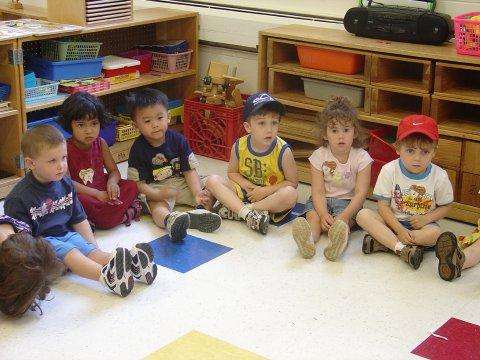
It is fun seeing kids grow up. One day, I asked the nursery teacher of my institution whether they could spot out leaders among the four year olds in the class.

"Of course", she replied. I spent next one hour watching 30 odd children who were busy then in a variety of activities. I discussed with the teacher as to what made leadership in kids evident. They were self confident and knew well what they were going to do. They smiled at me as I took interest in their activity. They were good humoured. They never made fuss when they had to share toys or blocks with others. They showed initiative and curiosity. They were always first to start and were innovative too. They liked others watching them. Their enthusiasm was contagious. They always wanted to take their classroom activities home and show it to their parents. When the teacher said they can take these only at the end of the term, they brought their parents all the way to the school to appraise them. Thanks to the teacher, she was positive, energetic, full of initiative, loved kids very much and was quite assuring.

As I discussed the leadership qualities of the kids with parents, some took pride in saying that their child was 'a born leader'. They began referring to their family lineage. But I am convinced that leaders are made and not born. Conscientious parents who follow simple rules can always foster a leadership mentality. Leaders may be democratic but still do not succumb to peer pressure. They will be mentally strong.

Children should be encouraged to lead in class and co-curricular activities. Childhood leaderships predict adult success.

About the Blog Author

The Author is an eminent educationist who has hands-on experience in the field for 35 years.

This blog is his endevour to present the best of his ideas on the upbringing of children during their crucial formative years between the ages of 4 and 15. Keep following the blog to reap the best of the knowledge nuggets that pour out from his wisdom.